Xuanzang
7th-century Chinese monk who journeyed to India and translated Buddhist scriptures.

Wikipedia / Wikimedia Commons
Xuanzang (6 April 602 – 5 February 664) was a 7th-century Chinese Buddhist monk, scholar, traveller, and translator. He is known for his epoch-making contributions to Chinese Buddhism, his travelogue of a journey to the Indian subcontinent from 629 to 645, and his efforts to bring at least 657 Indian texts to China, of which he translated 75 distinct sections totaling 1,335 fascicles, including important Mahayana scriptures.
- born
- 6 April 602, Chenliu (near present-day Kaifeng, Henan, China)
Lore & Background
Xuanzang was born Chen Hui on 6 April 602 in Chenliu. As a boy, he studied religious books with his father and became a novice monk at thirteen. Due to the fall of the Sui dynasty, he and his brother fled to Chengdu, where he was fully ordained at twenty. He later traveled throughout China seeking sacred Buddhist texts, eventually reaching Chang'an under Emperor Taizong of Tang. Concerned about incomplete and misinterpreted Buddhist texts in China, he resolved to visit India to obtain original Sanskrit scriptures.
Reader's Guide
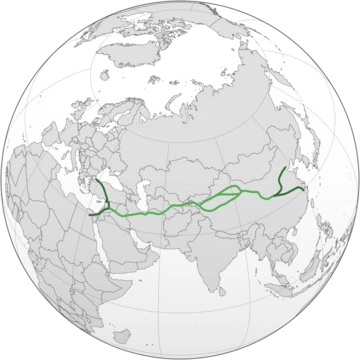
At age 27, Xuanzang began a seventeen-year overland journey to India, defying a ban on travel abroad. He visited Nalanda University in modern Bihar, India, studying with the monk Śīlabhadra. He returned with numerous Sanskrit texts on twenty packhorses. His travelogue, Records of the Western Regions, is a notable source for 7th-century India and Central Asia, mixing firsthand account, hearsay, and implausible elements. It provides a terminus ante quem of 645 for events and names mentioned. The work later inspired the Ming dynasty novel Journey to the West by Wu Cheng'en. Xuanzang's translations included key Mahayana scriptures, and his efforts significantly shaped Chinese Buddhism.
Did You Know?
- Xuanzang was also known by his Sanskrit Dharma name Mokṣadeva.
- He was only able to translate 75 distinct sections out of a total of 1,335 fascicles from the texts he brought.
- His travelogue, Records of the Western Regions, inspired the novel Journey to the West written about nine centuries after his death.
- The date of his pilgrimage's start is disputed between 627 and 629 CE in different sources.
Frequently Asked Questions
Who is Xuanzang?
Xuanzang was a 7th-century Chinese Buddhist monk, scholar, and translator best known for his 16-year journey to the Indian subcontinent and his massive translation project. He is regarded as one of the most consequential figures in the history of Silk Road cultural exchange.
What was Xuanzang's journey to India about?
Between 629 and 645, Xuanzang traveled from China across Central Asia to the Indian subcontinent, visiting monasteries, kingdoms, and sacred sites along the way. His detailed travelogue recorded the geography, politics, and religious life of the regions he crossed, making it a vital primary source for that era.
What did Xuanzang translate and how much work was it?
He brought back at least 657 Indian Buddhist texts and personally rendered 75 distinct works into Chinese, producing a total of 1,335 fascicles. These translations included key Mahayana scriptures that fundamentally reshaped Chinese Buddhist thought.
Why is Xuanzang considered so important in Silk Road history?
His translations introduced foundational Mahayana philosophy to the Chinese-speaking world, while his travelogue remains a cornerstone document for understanding 7th-century Central and South Asia. Together, these achievements make him a defining figure in the cross-cultural exchange that the Silk Road enabled.
When and where was Xuanzang born, and how did his life end?
Xuanzang was born on 6 April 602 in Chenliu, near present-day Kaifeng in Henan province, China. He died on 5 February 664 in Chang'an, where he had spent his final years supervising his translation projects.
More in Explorers Of The Silk Road And Beyond 1-20
Spotted an error? Know more?
This is a living reference — every entry is fact-audited, and reader corrections feed straight into our audit queue. Suggest an edit · See this site's audit record