Zhang Qian
Han envoy who opened the Silk Road to Central Asia.

Wikipedia / Wikimedia Commons
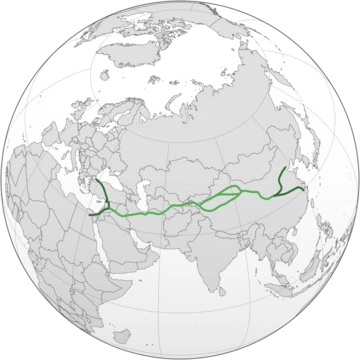
Zhang Qian (died around 114 BC) was a diplomat, explorer, and politician for the Western Han dynasty in the late 100s BC. He served as an envoy for Emperor Wu, becoming one of the first official Chinese diplomats to return with detailed knowledge of Central Asia. His reports covered the remnants of the Greco-Bactrian kingdom, which came from the Macedonian Empire, as well as the Parthian Empire. This information helped pave the way for later Chinese expansion into lands west of Xinjiang, including parts of Central Asia and areas south of the Hindu Kush. His journeys also established the Silk Road, which started a new era of exchange between eastern and western regions.
Emperor Wu sent Zhang Qian on his travels to form a military alliance with the Yuezhi against the Xiongnu and to establish political alliances that would act as protectorates. These missions opened up trade routes connecting East and West, introducing different goods and kingdoms to one another. The historian Sima Qian compiled Zhang’s accounts in the 1st century BC. The Central Asian sections of the Silk Road were largely expanded around 119–115 BC thanks to Zhang Qian’s explorations. Today, he is honored as a national hero in China for his key role in opening China and other known lands to wider commercial trade and global connections.
Zhang Qian was born in Chenggu district, east of Hanzhong in Shaanxi province. He arrived in the capital, Chang’an (modern Xi’an), between 140 and 134 BC as a Gentleman serving Emperor Wu. At that time, the nomadic Xiongnu tribes controlled what is now Inner Mongolia and dominated the Western Regions, the areas near Han territory. The Han emperor wanted to build a military alliance with the Yuezhi against the Xiongnu, but the hostile Xiongnu blocked outside contact.
In 138 BC, the Han court sent Zhang Qian, a military officer familiar with the Xiongnu, to the Western Regions with a group of ninety-nine members. His goal was to contact and ally with the Yuezhi against the Xiongnu. He was accompanied by a guide named Ganfu, a Xiongnu slave assigned to Zhang Qian. The first mission aimed to secure a military alliance with the Yuezhi, who lived in modern Tajikistan. To reach them, Zhang had to cross Xiongnu territory, where he and Ganfu were captured and held for about ten years. During this time, Zhang married a Xiongnu woman, who had a son with him, and earne
- born
- Chenggu district, Shaanxi, China
- died
- c. 114 BC
- field
- Diplomacy, exploration, politics
- nationality
- Chinese (Western Han dynasty)
- known_for
- Pioneering the Silk Road; missions to Central Asia; reports on Dayuan, Yuezhi, Daxia, and Anxi
Lore & Background
Zhang Qian was born in Chenggu district just east of Hanzhong in the north-central province of Shaanxi, China. He entered the capital, Chang'an, between 140 BC and 134 BC as a Gentleman, serving Emperor Wu of the Han dynasty. At the time the nomadic Xiongnu tribes controlled what is now Inner Mongolia and dominated the Western Regions. The Han emperor was interested in forming a military alliance with the Yuezhi against the Xiongnu, but outside contact was prevented by the hostile Xiongnu. The Han court dispatched Zhang Qian, a military officer familiar with the Xiongnu, to the Western Regions in 138 BC with a group of ninety-nine members to make contact and build an alliance with the Yuezhi against the Xiongnu. He was accompanied by a guide named Ganfu, a Xiongnu slave assigned to Zhang Qian.
Reader's Guide
Zhang Qian's significance lies in his pioneering role for the future Chinese conquest of lands west of Xinjiang, including swaths of Central Asia and lands south of the Hindu Kush. His missions opened trade routes between East and West and exposed different products and kingdoms to each other through trade. The Central Asian parts of the Silk Road routes were expanded around 114 BC largely through his missions and exploration. Although he was unable to develop commercial ties between China and these far-off lands on his first mission, his efforts eventually resulted in trade missions to the Wusun people in 119 BC which led to trade between China and Persia. His reports, compiled by Sima Qian in the 1st century BC, provided detailed news of sophisticated civilizations to the West, including Dayuan, Daxia, Anxi, and others, all great states rich in unusual products. Today, Zhang is considered a Chinese national hero and revered for the key role he played in opening China and the countries of the known world to the wider opportunity of commercial trade and global alliances.
Did You Know?
- Zhang Qian was captured and enslaved by the Xiongnu for thirteen years during his first mission.
- He was one of the first official diplomats to bring back information about the Greco-Bactrian remains of the Macedonian Empire.
- His reports included descriptions of the 'blood-sweating' Ferghana horse from Dayuan.
- Only Zhang Qian and his guide Ganfu survived the original mission of over a hundred men.
Frequently Asked Questions
Who is Zhang Qian?
Zhang Qian was a Western Han dynasty diplomat and explorer who served as an envoy under Emperor Wu in the late 100s BC. He is best remembered as one of the first official Chinese representatives to travel deep into Central Asia and return with detailed intelligence on foreign kingdoms.
What were Zhang Qian's main missions and discoveries?
He was dispatched to make contact with the Yuezhi and Dayuan peoples, and along the way he gathered reports on the Greco-Bactrian remnants, the Parthian Empire, and other states west of Xinjiang. His findings on regions like Daxia and Anxi gave the Han court its first reliable picture of Central Asian politics.
How did Zhang Qian's story end?
Zhang Qian died around 114 BC after completing his diplomatic service for the Western Han dynasty. His legacy endured as the groundwork he laid for Chinese expansion into lands beyond the Hindu Kush and into Central Asia.
Why is Zhang Qian considered so important to Silk Road history?
His journeys are widely credited with opening the formal trade and diplomatic corridor that later became known as the Silk Road. Without his reports on Central Asian kingdoms, the Han dynasty would have lacked the strategic knowledge needed to push its influence westward.
Where was Zhang Qian from and what was his nationality?
He was born in Chenggu district, in what is now Shaanxi province, China. He served the Western Han dynasty as a Chinese diplomat, explorer, and politician throughout the late second century BC.
More in Explorers Of The Silk Road And Beyond 1-20
Spotted an error? Know more?
This is a living reference — every entry is fact-audited, and reader corrections feed straight into our audit queue. Suggest an edit · See this site's audit record